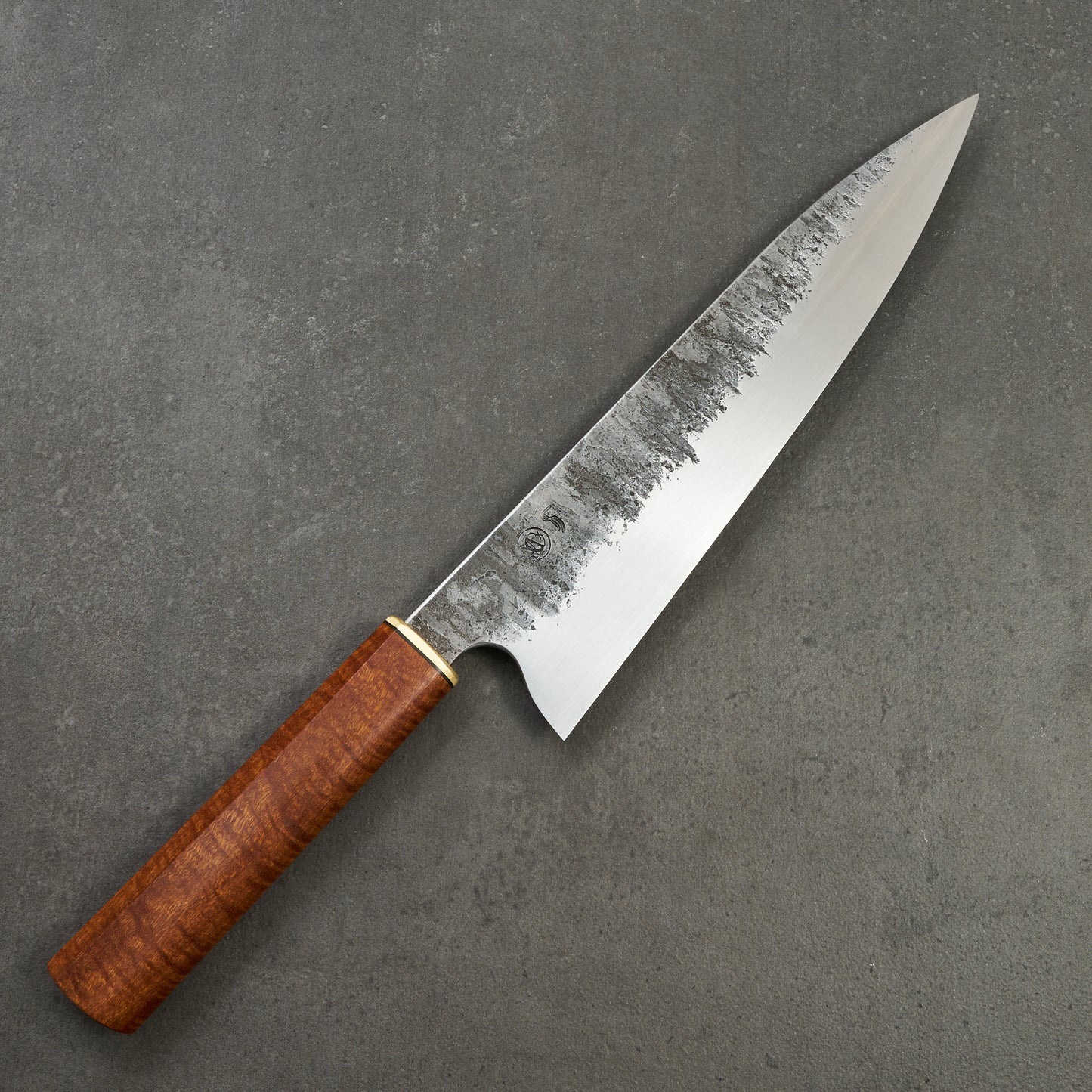
Gyuto 230mm AEB-L Gidgee MCx Fredrik Spåre
Gyuto 230mm AEB-L Gidgee MCx Fredrik Spåre
By MCx
No longer available
Our Sydney workshop is closed until Monday 9 November. Orders placed now are very welcome and will ship in the order received from Tuesday 10 November. Shipping details
Introducing the MCX Design Studio’s newest kitchen knife, crafted in collaboration with renowned Swedish blacksmith and Birch & Bevel alumnus, Fredrik Spåre. This extraordinary blade embodies the perfect blend of aesthetic elegance and cutting-edge performance. Forged entirely by Spåre himself, the knife boasts MCX’s signature pointed profile, which has been honed and refined through iterations of the MCX kitchen knife collection and the Birch & Bevel range. The result is a blade that features a forge-tapered convex geometry, ultra-thin convex bevels, and a razor-sharp edge. The edge profile includes a subtle radius that transitions smoothly from heel to tip, ensuring an exceptional cutting board experience. This design not only enhances precision and control but also reduces strain on the wrist, making it a joy to use for extended periods of culinary preparation.
At the heart of this masterpiece lies AEB-L stainless steel, a premium-grade material prized for its remarkable balance of toughness, edge retention, and corrosion resistance. AEB-L is often regarded as one of the finest steels for kitchen knives, thanks to its fine grain structure, which allows for a sharper, more refined edge. Unlike many other stainless steels, AEB-L offers high resistance to chipping, ensuring a durable, long-lasting cutting edge. The blade is hardened to 63HRC, a level that strikes the perfect harmony between hardness and flexibility. This high Rockwell rating gives the knife a sharp, enduring edge that maintains its precision cut after cut. The choice of AEB-L reflects a commitment to craftsmanship and performance, as it provides chefs and cooking enthusiasts with a tool that is both easy to maintain and impressively resilient.
No less attention is given to the handle, which reflects MCX's dedication to ergonomic design and luxurious materials. The handle features MCX’s classic tapered Rokkaku Hanmaru, also known as the "hex-round" shape, which provides a comfortable, secure grip for users of all skill levels. Crafted from stunning Australian ringed gidgee wood, a material celebrated for its deep, rich hues and natural hardness, the handle is as durable as it is beautiful. Accented with a brass bolster and a sleek black G10 spacer, this combination of materials creates a harmonious balance of texture, color, and functionality. The design is both timeless and contemporary, offering chefs a sense of pride and pleasure with every use. Ideal for professional kitchens and home cooking alike, this handmade knife is a testament to the artistry of Fredrik Spåre and the design excellence of MCX. Whether you’re preparing delicate garnishes or breaking down hearty ingredients, this knife ensures every task is performed with precision, style, and comfort.
Product Specification
- Blade Type:
- Overall Length: 375mm
- Edge Length: 230mm
- Spine Heel: 3.03mm
- Spine Mid: 1.87mm
- Spine Tip (20mm before): 0.95mm
- Blade Height: 54mm
- Weight: 188g
- Cutting Edge Steel:
- Steel class: Stainless
- HRC: 63
- Blade Construction:
- Blade Finish: Brut de Forge, Satin Polish
- Grind:
- Handle Construction:
- Handle Materials: Australian Ringed Gidgee, G10, Brass
- Handedness: Ambidextrous
Shipping & Returns
Shipping & Returns
Shipping
We process orders Monday to Friday from our Sydney workshop. Australian orders are shipped with Australia Post and international orders with DHL Express. Shipping charges are calculated at checkout based on destination, shipment size and weight, and the carrier service available for the order.
Returns
If you're not entirely happy with your purchase, you can return it within 14 days of delivery for a refund. The item must be in its original condition with all original packaging.
- Returns are accepted for 14 days
- The customer is responsible for return shipping costs
- A 15% restocking fee may be applied to change-of-mind returns
- We do not accept returns on second-hand items for change of mind
Faulty or Damaged Items
You must notify us within 5 business days of receiving your order. Photographic evidence of damage is required. Once approved, Modern Cooking will cover return shipping costs.
Product Care
Product Care
Cleaning: Clean by hand with warm water. Avoid wetting the handle when possible.
Sharpening: We advise using whetstones to sharpen your knives and a honing rod or steel to maintain the burr between sharpening sessions.
Reactive Steels: Reactive steels like Aogami Super, Apex Ultra or premium reactive German and Swedish steels are susceptible to rust if not properly cared for. Keep the knife dry between uses and when storing for longer periods, wiping the blade with Tsubaki oil or another food-safe oil is a wise choice. A patina can be a beautiful personal feature on your knife and helps to stop rust forming.
Handle Care: For non-stabilised wooden handles, apply Tsubaki oil or another food-safe oil from time to time. Food-safe wax can be applied to both stabilised and non-stabilised wooden handles. Never apply hot wax or oil as you risk warping or damaging the handle.